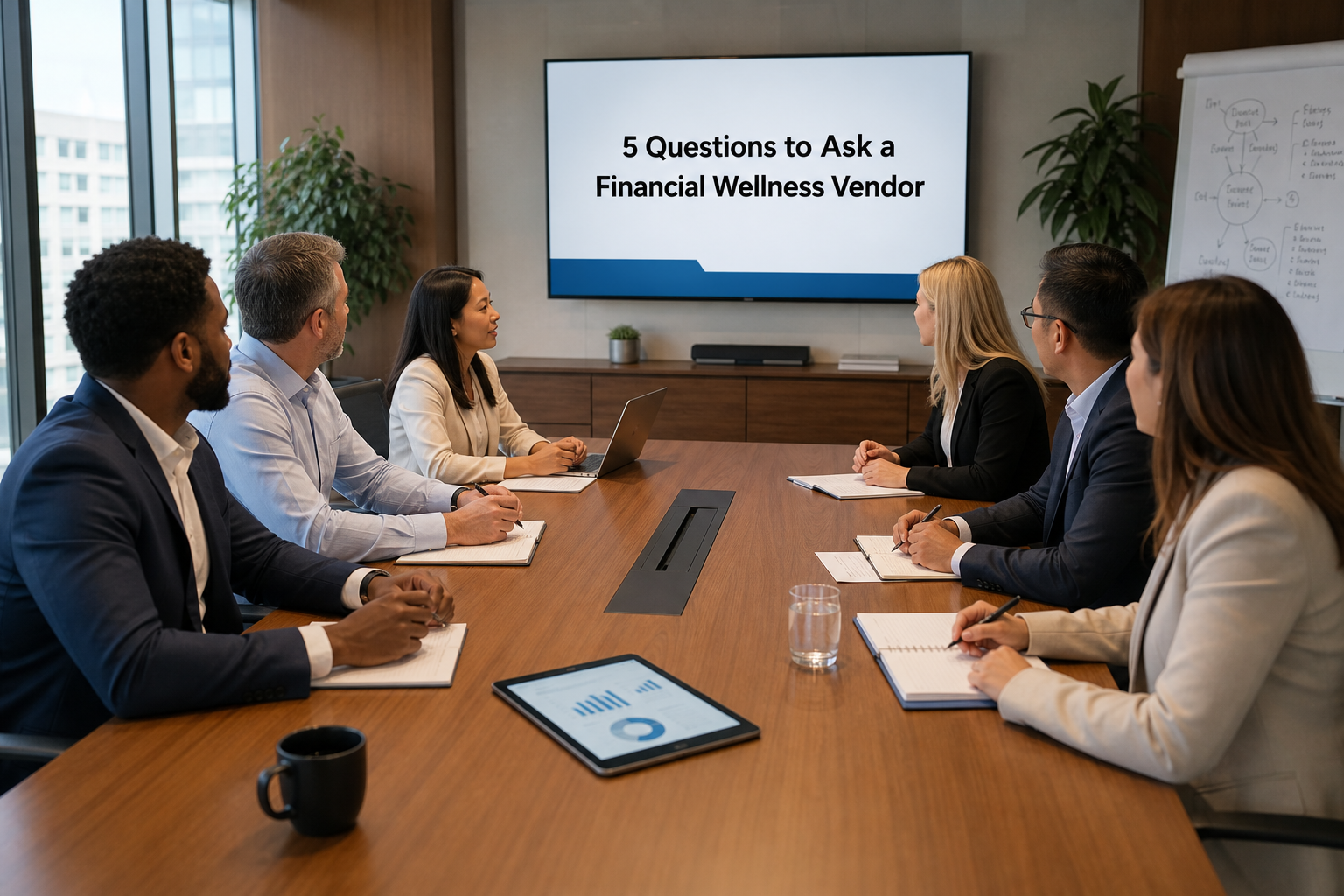
 Bringing a new vendor to a retirement plan committee carries a risk that has nothing to do with whether the product is any good. If a committee member asks a question you cannot answer, the meeting stops being about the benefit and starts being about your preparation. That is a bad trade for anyone.
The way to avoid it is to run the same five questions against every financial wellness vendor you look at, before the vendor ever appears on an agenda. These are the questions committees actually ask, in roughly the order they ask them.
1. Does this touch plan assets?
This is the first question and it settles the tone of everything that follows. A benefit that sits outside the plan is a different conversation than one that interacts with plan assets, contribution flows, or the recordkeeping relationship.
Ask the vendor directly whether the benefit requires a plan amendment, whether it moves or holds participant money, and whether it changes anything in the recordkeeper relationship. Get the answer in writing. If a vendor is vague here, that vagueness will surface again in front of the committee.
2. Who pays, and how is it priced?
There are three common models: the employer pays, the participant pays, or the vendor is paid some other way that is not immediately obvious. The third one is the one to look for.
If participants pay, understand exactly what they pay and when. If the vendor earns revenue from a source other than the sponsor or the participant, ask what that source is. A committee will find out eventually, and it is better that they find out from you.
3. What does the sponsor's team actually have to do?
Plan sponsors rarely reject a benefit because they dislike it. They reject it because the HR team is already carrying more than it can hold and the rollout looks like another project.
Get specifics: implementation timeline, what data has to be exchanged and in what format, whether integration with the recordkeeper is required, who runs enrollment communication, and what the ongoing administrative load looks like once the benefit is live. A vendor who can describe a light footprint in concrete terms is easier to bring forward than one who says implementation is "simple."
4. What are my disclosure obligations?
If you have any compensation relationship with the vendor, direct or indirect, you know where this goes. Confirm it early and document it.
Even when there is no compensation involved, it is worth stating that plainly to the committee at the same time you introduce the benefit. Volunteering the answer before anyone asks is a small thing that pays for itself.
5. What do I get back that I can show the committee next year?
A benefit that generates no reporting is a benefit you cannot defend twelve months from now. Ask what utilization data you receive, at what interval, and in what form. Ask whether it comes to you or only to the sponsor.
You want something you can put in front of the same committee at the next annual review and say, here is what happened. Without that, the benefit is a one-time recommendation rather than an ongoing part of your value to the client.
Where GigMatch lands on these
We built our advisor materials around these five questions because they are the ones we get asked. GigMatch is an employer-paid benefit that helps employees earn additional income using things they already own and skills they already have. It sits outside the plan, requires no plan amendment, and does not require recordkeeper integration.
If you want the short version you can take into a committee meeting, [link to advisor one-pager] or [book 15 minutes] and we will walk through it.